

Are Your Training Programs Ready for 2026? 10 Things Government Agencies and Growing Enterprises Need to Know
- walt359
- Feb 18
- 5 min read
The gap between training programs and actual organizational needs has never been wider. Government agencies and growing enterprises are navigating unprecedented complexity: AI adoption, distributed workforces, cybersecurity threats, and rapidly evolving compliance requirements. Yet many training initiatives still rely on one-size-fits-all approaches designed for a world that no longer exists.
If your training programs haven't evolved in the past 18 months, they're already behind. Here's what needs to change: and what forward-thinking organizations are doing right now to future-proof their workforce capabilities for 2026 and beyond.
1. AI Integration Isn't Optional Anymore
Artificial intelligence is no longer a "nice-to-have" skill reserved for technical teams. It's a baseline capability that every employee: from analysts to executives: needs to understand and leverage responsibly.
The question isn't whether to train your workforce on AI. It's how quickly you can build AI literacy across your organization without creating compliance gaps or ethical blind spots.
Effective AI training programs address three core areas: foundational AI literacy (what it is, what it can and cannot do), responsible use and ethics (bias, transparency, accountability), and practical application within existing workflows. The goal isn't to turn everyone into data scientists. It's to enable informed decision-making and responsible adoption.

2. Generic Training Programs Are Burning Budget
The most common complaint we hear from government leaders: "We invested in training, but nothing changed."
The root cause? Generic, off-the-shelf programs that don't address the specific challenges, workflows, or culture of your organization. When training doesn't connect to real work, it doesn't stick.
Role-specific learning journeys that mirror actual job responsibilities, scenarios based on your organization's processes and pain points, and knowledge transfer built into program design: not tacked on afterward: are what drive measurable impact. Training should feel like a roadmap for the work you're already doing, not an interruption from it.
3. Digital Skills Are the New Baseline
Collaboration platforms, workflow automation, data visualization, and digital security awareness aren't "tech skills" anymore. They're foundational capabilities for modern government operations.
If your team can't confidently navigate Microsoft Teams, SharePoint, or workflow automation tools, they're operating with one hand tied behind their backs. And in a distributed or hybrid work environment, digital fluency directly impacts mission delivery.
The gap here isn't just technical: it's operational. Organizations that invest in digital skills training see faster onboarding, fewer process bottlenecks, and higher employee confidence in navigating change.
4. Cybersecurity Training Can't Be Compliance Theater
Every federal agency knows cybersecurity is a priority. But too many training programs treat it as a check-the-box compliance requirement instead of a capability-building initiative.
Threat landscapes evolve daily. Training programs that rely on annual refreshers and generic phishing simulations aren't building the workforce capability needed to protect sensitive data and critical infrastructure.

Effective cybersecurity training is continuous, role-relevant, and grounded in real threat scenarios. It also connects individual actions to organizational risk: so employees understand not just what to do, but why it matters.
5. Leadership Development Must Address Complexity
The leadership playbook from 2019 doesn't work in 2026. Leaders are navigating hybrid teams, AI-driven decision support, stakeholder expectations that shift rapidly, and workforce stress at historic levels.
Leadership training must evolve beyond management fundamentals to address adaptive leadership for uncertain environments, values-based decision-making under pressure, resilience and wellbeing (for leaders and their teams), and leading distributed teams effectively.
Strong leadership development doesn't just build better managers. It creates the organizational capacity to navigate complexity without stalling.
6. Communication and Collaboration Are Strategic Skills
As work becomes more distributed and technology-mediated, communication skills have become a competitive advantage: not a soft skill.
Effective teams excel at storytelling and plain language communication, active listening in virtual environments, building trust without daily face-to-face interaction, and critical thinking in AI-enhanced decision-making contexts.
Organizations that treat communication as a strategic capability (and train accordingly) move faster, reduce misalignment, and sustain momentum through major transformations.

7. Skills Intelligence Tools Identify Where to Invest
The biggest mistake organizations make: guessing at training needs instead of measuring them.
Skills intelligence tools provide data-driven clarity on capability gaps, workforce readiness for upcoming initiatives, and ROI from training investments. This shifts training from a reactive cost center to a strategic enabler of mission delivery.
When you know exactly where capability gaps exist: and how they impact performance: you can prioritize training investments that deliver measurable business impact instead of spreading resources across generic programs that don't move the needle.
8. Personalized Learning Platforms Beat One-Time Events
The traditional training model: bring everyone into a room (or a virtual session) for a one-time event: doesn't support the continuous learning required in fast-changing environments.
Personalized learning platforms enable on-demand access to role-specific content, career development pathways aligned to organizational needs, microlearning that fits into the flow of work, and progress tracking that connects learning to performance outcomes.
Continuous learning isn't just better for employees. It's how organizations build adaptive capacity and reduce the lag time between skill gaps and capability building.
9. Compliance and Regulatory Training Must Stay Current
Federal agencies operate in highly regulated environments where outdated training creates organizational risk. Regulatory requirements evolve. Industry standards shift. New policies take effect.
If your compliance training doesn't reflect current requirements, you're not just failing to meet standards: you're building false confidence in employees who believe they're operating correctly.
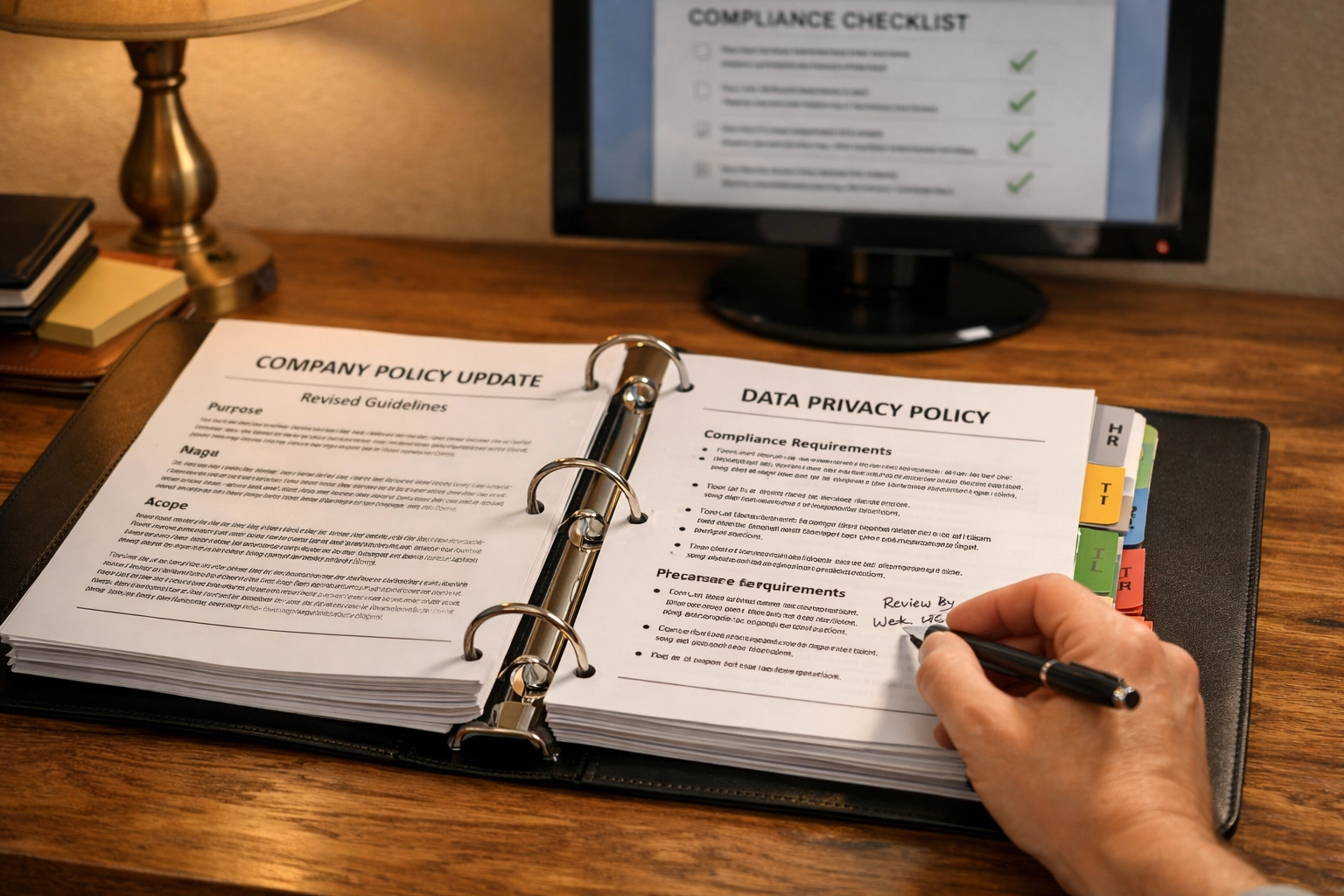
Effective compliance training is modular (easy to update as requirements change), scenario-based (so employees understand application, not just theory), and integrated into operational workflows (not siloed as a separate "training day" activity).
10. Hybrid Workforce Management Requires New Capabilities
Workforce modernization isn't just about technology. It's about enabling performance, collaboration, and engagement across distributed teams while maintaining organizational culture and mission focus.
Training programs must address managing performance in hybrid environments, sustaining collaboration across time zones and locations, maintaining engagement without daily in-person interaction, and onboarding new employees into distributed teams effectively.
Organizations that build these capabilities early avoid the productivity dips, cultural erosion, and retention challenges that plague teams trying to operate in hybrid models without the right skills and structures in place.
What This Means for Your Organization
Future-proofing your training programs isn't about adding more content. It's about shifting from generic, event-based training to strategic, capability-building initiatives that align with organizational priorities and enable measurable performance improvement.
The organizations that thrive in 2026 and beyond will be the ones that treat training as infrastructure: not an overhead cost. They'll invest in role-specific learning, continuous development platforms, and change management strategies that ensure new capabilities translate into sustained performance gains.
At OTS, Inc., we help government agencies and growing enterprises design training and enablement strategies that stick. Our approach integrates change management, knowledge transfer, and performance support: so training doesn't just happen, it drives results.
Ready to assess whether your training programs are future-ready? Let's talk about what sustainable capability building looks like for your organization. Visit www.ots-nc.com or reach out directly: we'd love to help you build the infrastructure of your success.
Comments